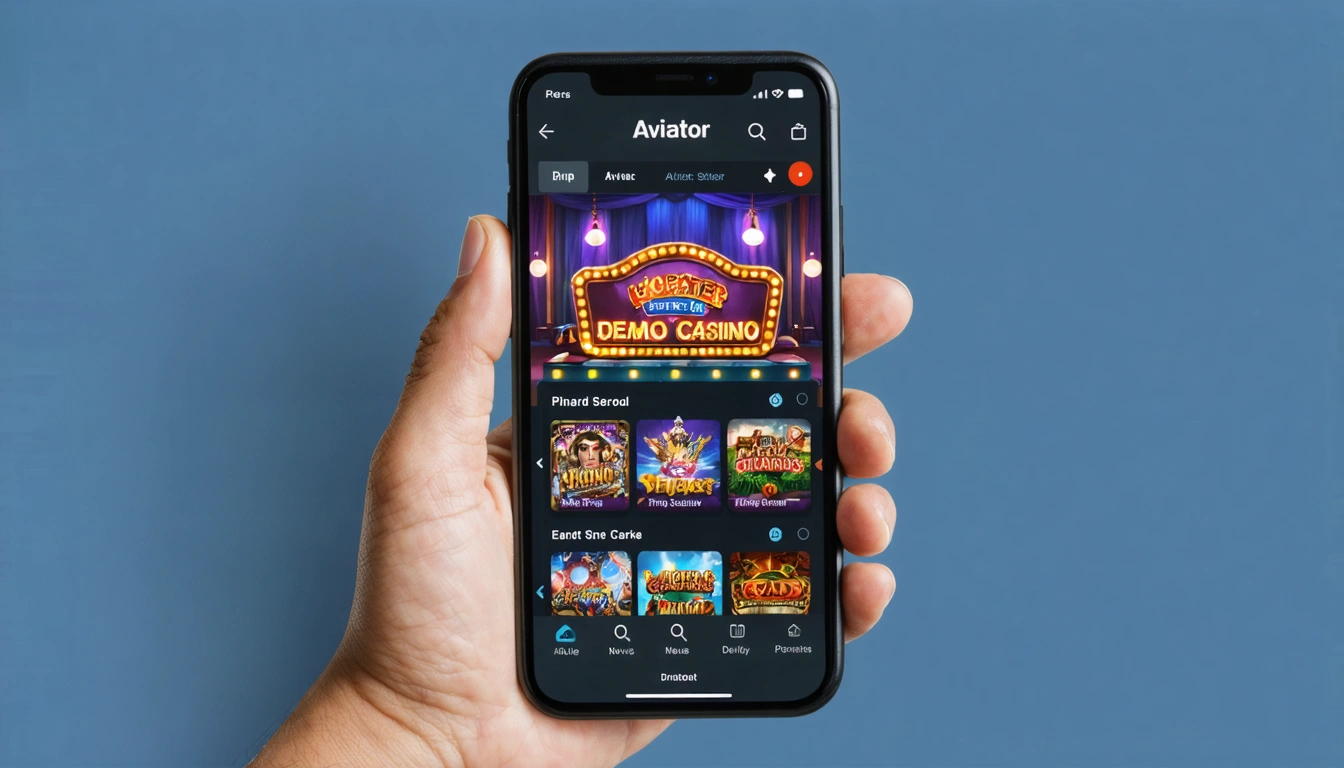
Aviator demo guide for learning gameplay and strategies
Aviator demo gives you the crash-game feel without risking cash, perfect for dialing in timing and learning when to cash out during frantic rounds. Short sessions in the practice version reveal how swings feel and help build discipline before depositing real money.
Conecte-se| Stat | Typical Value |
|---|---|
| RTP | ~96–98% |
| Volatility | High (fast crash dynamics) |
| Minimum bet | $0.10–$1 typical |
| Session pacing | Very quick rounds; many plays per hour |
| Bankroll tip | Use 0.5–2% unit sizing per run |
Most players start with a low unit to get the timing down; the demo aviator rounds help you test when multipliers spike and when to auto-cashout without risking real money. If you’re serious about learning staking paths, min bets around $0.10–$1 make sense for practice and you should treat each run like a micro-session where loss streaks are expected and patience wins.
A quick aviator free demo run lets you map outcomes, variance swings, and ideal cashout targets before staking real funds. After warming up, use that pattern data to inform live stakes–aviator demo play is about trend recognition and steady unit sizing rather than chasing recent wins. Check casino bonuses and promo codes, understand KYC and deposits/withdrawals speed, use support if needed, keep units conservative, and remember that switching to tables or live dealers shifts tempo and requires adjusting bankroll allocations accordingly.

Aviator demo: step-by-step hands-on guide
Start by launching a session in a controlled way to focus only on variance management rather than chasing wins; observe dozens of rounds to build a sense of how often multipliers trend low or spike, and keep your initial stake tiny so you can run many cycles. To begin, play aviator demo. Keep a simple log of each round’s cashout point and time of day to spot clustering and to avoid relying on apparent streaks that are just noise.
Next, set unit sizes and loss tolerances and practice a target-cashout routine where you deliberately cash out at predetermined thresholds to measure expected returns over many trials; treat the round outcomes as samples from a high-volatility distribution and record how frequently you hit your chosen thresholds. Use the demo aviator environment to repeat exact bet patterns without financial pressure, testing sequences like fixed staking, proportional staking, and martingale-lite to see which handles variance best for your style.
Then use an aviator demo account to simulate session rules: define bankroll units, a session win goal, and a stop-loss, and run statistically meaningful blocks of rounds rather than anecdotal plays. Note min bet effects only once when sizing units and track streak lengths to estimate required buffer capital; this hands-on experimentation reveals whether your plan survives cold stretches and how often you will need to reduce bet sizes to avoid ruin.
Finally, analyze the logs to compute simple metrics – average cashout, median, frequency of outs above your thresholds, and longest losing run – and iterate your rules until they produce acceptable drawdowns. The demo-driven routine gives you disciplined muscle memory for timely cashouts and stake adjustments, so when you move to real funds you have a tested plan for managing variance rather than reacting emotionally to individual rounds.
Locating Sandbox Environment for Variance Management
When assessing variance management for a crash-style or multiplier-driven title, a realistic sandbox environment is invaluable: it lets players and risk analysts observe session-to-session payout dispersion without financial exposure. Finding a test server or demo mode that mirrors live math models enables determination of tail behavior, average run lengths, and streak probabilities essential to bankroll planning, and confirms whether surge patterns align with advertised metrics like RTP or declared volatility.
Start by verifying that the environment reproduces core mechanics accurately rather than offering simplified randomness that understates swings; documentation or small test batches of rounds can reveal whether the same distributional features are present. A proper sandbox will permit repeated trials, consistent seeds across runs for reproducibility, and enough rounds to expose heavy tails so staking tactics can be stress-tested.
Practical steps often involve locating an official test area labeled as a demonstration interface where you can observe large samples; for example, using an aviator demo play instance to record crash multipliers and estimate variance without risking balance. In that sandbox, monitor how often extreme outcomes cluster and whether features like multipliers manifest the expected frequency and co-occurrence with rapid declines, so volatility assumptions for staking systems hold up under scrutiny.
Maintain separation between exploratory plays and any promotional or locked account features; sandbox outputs should be compared to live history to validate that the model scales, paying attention to minimum stake floors and session-level variance rather than isolated wins. Avoid relying on short-session impressions since variance requires long-run observation to surface structural risks such as long droughts or sudden payout bunching.
Once a trustworthy environment is located, incorporate its sampled distribution into betting rules and reserve calculations, calibrating stop-loss thresholds and bet sizing to protect against rare but damaging runs observed in the sandbox; many players will then confidently use an aviator free demo or later transition to a live test after confirmation that sandbox behavior matches expectations before they decide to play aviator demo.
Exploring Practice Controls for Variance Management in Aviator Demo
Using practice controls in demo mode is invaluable for learning how to tame swings without risking real funds; running long sequences inside aviator free demo lets you experiment with bet scaling and stop-loss rules to see how different patterns affect running bankrolls. Treat the demo like a safe lab for timing auto-cashout levels and testing whether gradual bet ladders or flat staking keeps you closer to your target return over many rounds.
Focus on measurable variables: adjust bet increments, set session length caps, and measure payout distributions to estimate the game’s variance rather than rely on instinct alone. Try brief stress tests where you intentionally chase or pull back to observe tilt triggers; keeping notes on streaks and payout clustering helps convert demo observations into rules that limit downside in live play.
When you move between control setups, track outcomes with consistent conditions so comparisons are meaningful – for example, compare manual cashouts versus a strict auto rule while keeping bet size constant during aviator demo play. Use small changes to identify sensitivity points, and record how often larger multipliers show up under each regime so your staking plan matches observed frequency instead of memory.
Translate those findings into a clear session plan: predefine your maximum loss per session, ideal number of rounds, and a withdrawal trigger for profits. Practicing these controls repeatedly builds discipline, turning ad-hoc reactions into a repeatable routine that reduces variance impact when you switch to real stakes. The demo also highlights psychological edges – seeing losses without financial pain helps you refine stopping rules.
Finally, use the demo to rehearse bankroll allocation and exit signals before committing money, so you know when to increase or scale back bets under real conditions; disciplined practice in play aviator demo can shrink the experience gap between theory and reality and make variance manageable instead of overwhelming.
Registering Temporary Profile: Withdrawal and Verification Reality
When players register a temporary profile to experiment with the system, many operators allow an aviator demo play to explore gameplay mechanics but explicitly mark those sessions as non-withdrawable until identity verification is completed.
These temporary profiles are useful for practice, yet the immediate reality is rigid: limits on maximum trial wins, blocked payout buttons, and mandatory prompts for document upload if any cash conversion is attempted. Even when the UI mirrors real stakes, a demo aviator balance shown on screen will not be fungible until the operator performs KYC and links a verified payment method.
Operators cite fraud prevention and AML rules when enforcing these restrictions, so players should expect requests for ID, proof of address, and sometimes source-of-funds documentation before any withdrawal is approved. Upgrading is the normal route because an aviator demo account exists solely for training; once you complete verification the caps and withdrawal holds are typically lifted, though conditional checks can still delay payouts for several days while compliance teams review files.
Understanding this withdrawal/verification reality is crucial: treat temporary profiles as practice wallets rather than provisional cash accounts, avoid relying on trial wins to finance play, and prepare verification documents in advance to expedite conversion to a fully verified account and legitimate withdrawals.
Conclusion
Simulating betting strategies gives players a clearer sense of payout expectations and the high variance typical of crash-style games, helping to identify whether a style produces frequent small wins or rare outsized returns; watch bankroll swings, session length, changing odds while tracking results, and record decision timing and long-term averages. For low-risk rehearsal of timing and cashout rules, consider aviator free demo.
Always prefer licensed casinos and inspect basic safety signals such as clear licensing information, SSL encryption, fair-play audits, transparent terms and timely support before committing funds. A hands-on trial like demo aviator lets you map how a plan behaves without real money at stake.
Notes
Maintain responsible limits, set stop-loss thresholds, schedule cooldown breaks, and practice conscious play so simulations translate sensibly into live sessions; avoid chasing losses and reassess strategies objectively. If you move from testing to live play, try to play aviator demo as a bridge to real betting, and remember to review any bonuses, promo codes or new slots policies to ensure offers align with your goals and limits.
Q&A:
What is the Aviator demo?
Aviator demo is a practice version of the Aviator game that mirrors live rounds without risking real funds. You can use an aviator demo account to test timing and patterns before wagering actual money.
How do I start playing the demo?
To begin, open the demo page and select a virtual balance to use for practice. If you want a quick trial, place a bet and observe how the multiplier changes during a round to play aviator demo.
Is the Aviator demo free to use?
Yes, the demo is provided at no cost so newcomers can learn the mechanics. The aviator free demo supplies virtual credits so you can try different approaches without any financial exposure.
Can I test strategies in the demo?
Yes, the demo lets you experiment with timing, bet sizes and risk limits under realistic pacing. Keep a simple log of results and refine your approach over multiple rounds to see what works best.
Will demo wins transfer to my real account?
No, outcomes in the demo are separate and do not move into your live balance, so simulated wins remain virtual. When you are ready to risk real funds, switch to a funded session after using demo aviator for practice.